

The history of Heron Island
Caversham’s history stretches back to before 1066 and the original parish church of St Peter was founded around 1162. The wooden tower was erected following the damage the church suffered in the Civil War during the battle for control of Caversham Bridge. During the late 19th century the church was virtually rebuilt and a further chapel was erected in 1924 as a memorial to those who died in the First World War. Among the medieval features that survive are the Norman inner doorway of the porch, a couple of 12th century walls in the north east corner, and the baptismal font.
A mile and a half downstream lay Caversham Mill on what is now Heron Island, and the nearby cluster of Victorian houses and streets made up Lower Caversham. The Mill at Heron Island is believed to be the one mentioned in the Domesday Book. In the time of Edward the Confessor it was held by Svain, a Saxon thane and Lord of Caversham.
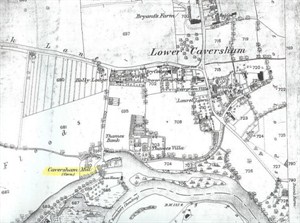
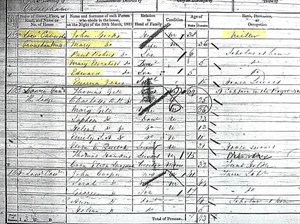
Many historic buildings lie within the precincts of Caversham such as the Public Library, a gift from the USA by the Scottish-born self-made millionaire Andrew Carnegie. It was opened in 1907. The above map is from 1877 with the census entry from 1851 showing an entry for John Hicks was the miller and lived with his wife Mary and their four children at the Caversham Mill.
Close by St Peter’s Church stood Caversham Rectory, later to become Caversham Court, part of which was erected during the 17th century. Unfortunately the house was later demolished but the beautiful terraced gardens and dovecote remain a graceful riverside haven for visitors.
In 1493 Henry VII leased the manor of Caversham to the monks of Notley Abbey and two watermills and a barge were listed in the property. With the growth of the cloth industry circa 1542 there were two more mills in the village, as well as two corn mills.
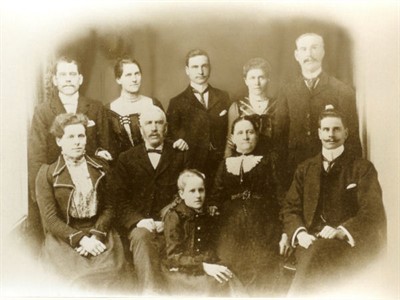
William Harwell, a well-known local artist, painted the Heron Island Mill around 1850, and it is thought to have been as attractive as the mill at Mapledurham, which is still in operation. People were still bringing sacks of corn to be ground in the early 19th century and the Caversham Mill did not finally close until 1929. Below is an image of Caversham Mill residents in the late 19th Century.
Until Reading Bridge was built in 1923, the main means of getting from Reading to Lower Caversham by foot was via the lock and footbridge, across the weir and along path leading to the nearby island mill, to what is now Coldicutt Street. The old street lighting along this path was made functional again about two years after the erection of the Heron Island estate.
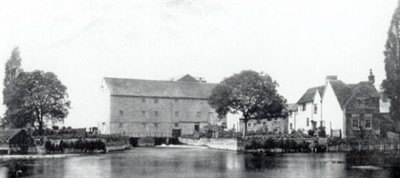
The bridge at Heron Island in 1923
Caversham was not always an extension of Reading and the residents of the Borough objected strongly to the merger when – in 1911 – the boundaries of the Reading Borough were extended to absorb Caversham and Tilehurst.
Until 1911 Caversham had been wholly in Oxfordshire and the barrier of the Thames had created a natural boundary which enabled Caversham to lead an existence separate from that of its much larger and busier neighbour. Since 1891 Caversham had been governed by its own Urban District Council and had its own police station and officers.
Following the end of milling, the island had a cork factory built on it in 1952 and in 1964 the beautiful tall poplars to the north-west side of our present estate were planted.
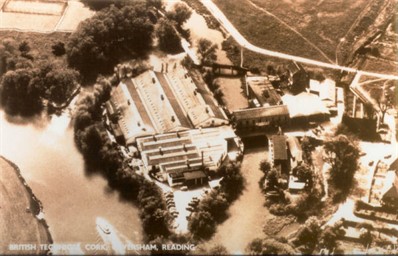
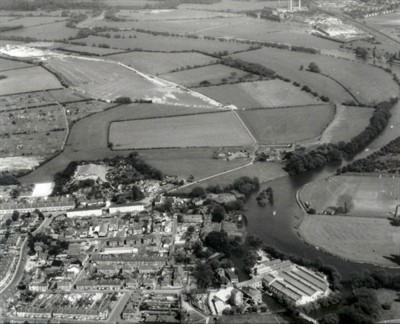
Aerial views of Heron Island in 1964 showing the cork factory
In 1986 the building of the Heron Island Estate began and was completed in the following year. It consists of some 47 houses. They are made up of four different designs with one free-standing house at the east end of the complex. Some houses lie along the Thames River, some along the cut between Heron Island and View Island, some along the old mill stream and others overlook the main mooring basin, or lie in the centre of the island.
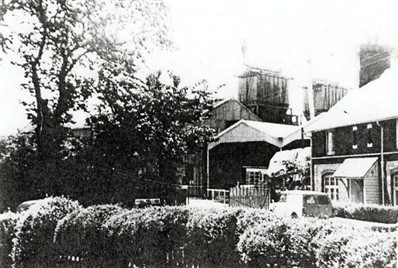
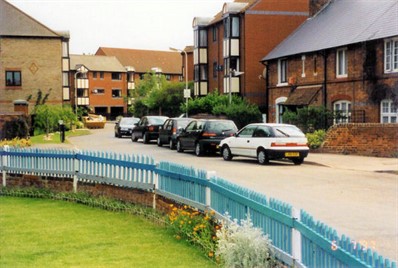
The entrance to Heron Island— Changes between 1960 (left) and 1997 (right)
Heron Island is a gem setting for its attractive houses, where residents enjoy seeing swans, geese, coots, ducks, grebes, herons and kingfishers which make up the river life. Heron Island Residents Association (HIRA) was established soon after the estate became populated.
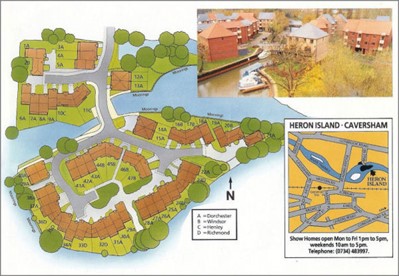
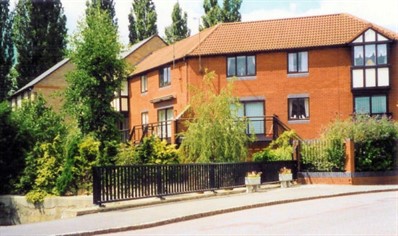
Sales materials and original images of the development
The original sales brochure for Heron Island is here